

How does the print on hard shell luggage affect its aerodynamics (if relevant for travel)?
Dec 05, 2025
Leave a message
Hey there, fellow travelers and luggage enthusiasts! I'm a supplier of printed hard shell luggage, and I've been getting a lot of questions lately about how the print on our luggage affects its aerodynamics, especially when it comes to travel. So, I thought I'd dive into this topic and share what I've learned.
First off, let's talk about why aerodynamics matter in luggage. When you're traveling, especially by plane, your luggage is going to be subjected to a lot of forces. The faster the plane is moving, the more air resistance your luggage has to deal with. This can affect how easily your luggage moves through the air, and in some cases, it can even impact fuel efficiency. Now, I know what you're thinking - "How much of a difference can a little print really make?" Well, it might surprise you.
When it comes to aerodynamics, the shape and surface of an object play a huge role. A smooth, streamlined surface generally allows air to flow over it more easily, reducing drag. On the other hand, a rough or uneven surface can disrupt the airflow, creating turbulence and increasing drag. So, where does the print on our hard shell luggage fit into this equation?
The type of print we use on our luggage can vary. We have everything from simple patterns to elaborate designs, like the ones you can find in our Printing Luggage Set. Some prints are raised, while others are flat. Raised prints can create small bumps on the surface of the luggage, which can potentially disrupt the airflow. However, the size and shape of these bumps matter. If they're very small and evenly spaced, the impact on aerodynamics might be minimal.

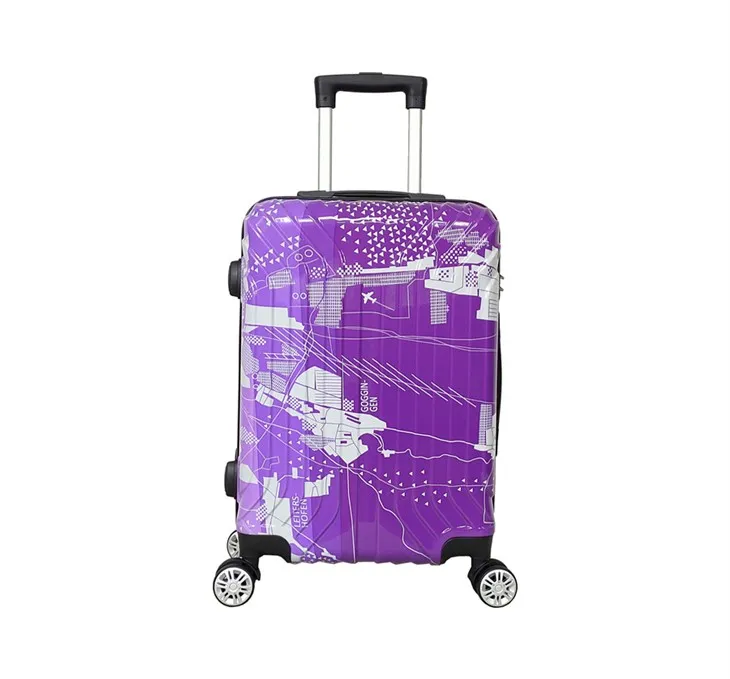
For example, let's take a look at our Floral Hardside Luggage. The floral print on this luggage is relatively flat, with only a slight texture. In this case, the print is unlikely to cause significant turbulence. The air can still flow over the surface of the luggage fairly smoothly, and the overall aerodynamic performance won't be affected too much.
On the other hand, if we have a print with large, raised elements, like a 3D logo or a very thick pattern, it could have a more noticeable impact on aerodynamics. These large bumps can create pockets of turbulence behind them, which can increase drag. But even then, it's important to put things into perspective. The amount of drag created by the print is usually going to be much smaller compared to other factors that affect the aerodynamics of the luggage, such as its overall shape.
The shape of the luggage itself is a major factor in determining its aerodynamic performance. A rectangular or square-shaped luggage with sharp edges is going to create more drag than a rounded or oval-shaped one. This is because the sharp edges disrupt the airflow more easily, creating more turbulence. So, even if you have a print on your luggage that's not the most aerodynamic, a well-designed shape can help compensate for it.
Another thing to consider is the speed at which the luggage is moving. When your luggage is on a plane, it's moving at a very high speed. At these speeds, even small differences in aerodynamics can add up. However, when your luggage is being transported on a conveyor belt at the airport or being pulled behind you on the ground, the impact of aerodynamics is much less significant. The slower speed means that the air resistance is lower, and the print on the luggage is less likely to have a noticeable effect.
Now, you might be wondering if all this talk about aerodynamics actually matters in real-world travel. Well, for most travelers, the difference in aerodynamics caused by the print on their luggage is probably not going to be something they'll notice. It's not going to make your luggage fly off the conveyor belt or cause your plane to use significantly more fuel. But for airlines and shipping companies, every little bit of efficiency counts. They're always looking for ways to reduce drag and improve fuel efficiency, and even small changes in the design of the luggage can contribute to that.
As a supplier of printed hard shell luggage, we take all these factors into account when designing our products. We want to offer luggage that looks great and also performs well. That's why we carefully choose the prints and patterns we use, making sure that they don't have a negative impact on the aerodynamics of the luggage. We also work on improving the overall shape of our luggage to make it as aerodynamic as possible.
If you're in the market for some new luggage, and you're concerned about aerodynamics, don't let the print be the deciding factor. Instead, focus on the overall design and shape of the luggage. Look for a luggage that has a smooth, rounded shape with minimal sharp edges. And of course, choose a print that you love, because at the end of the day, your luggage should reflect your personal style.
We have a wide range of printed hard shell luggage options available, including the beautiful Floral Spinner Luggage. Whether you're looking for a simple pattern or a more elaborate design, we've got something for everyone. And if you have any questions about the aerodynamics of our luggage or any other aspect of our products, don't hesitate to reach out to us.
If you're interested in purchasing our printed hard shell luggage for your business or personal use, we'd love to have a chat with you. We can discuss your specific needs and help you find the perfect luggage for your requirements. Just get in touch, and we'll be happy to assist you.
In conclusion, while the print on hard shell luggage can have some impact on its aerodynamics, it's usually a relatively minor factor compared to the overall shape of the luggage. By choosing a well-designed luggage with a smooth surface and a good shape, you can minimize the effects of drag and ensure that your luggage performs well during your travels.
References
- "Aerodynamics for Dummies" by Donald R. Bauers
- "Fluid Mechanics: Fundamentals and Applications" by Yunus A. Cengel and John M. Cimbala