

Suitcases Are Starting To Think: How Are Smart Features Transforming The Travel Experience
Apr 20, 2026
Leave a message
Have you ever waited anxiously for your luggage at the airport carousel? Have you ever had to frantically repack your bags at the check-in counter because they were overweight? By 2026, these frustrating scenarios will be resolved one by one by a "thinking" suitcase.

According to data from Fortune Business Insights, the global smart luggage market reached $3.4 billion in 2025 and is projected to grow to $3.77 billion in 2026, surpassing $10.23 billion by 2034-a compound annual growth rate (CAGR) of 13.29%. This rapid market expansion is driven by consumers' ongoing pursuit of travel convenience and security. Smart features such as GPS tracking, built-in charging ports, remote locking systems, and automatic weight sensors are evolving from exclusive selling points of high-end brands into standard features of mainstream products
The core functions of smart luggage address four major pain points.
luggage tracking
Built-in GPS or Bluetooth chips allow users to locate their luggage in real time via a mobile app, solving the problem of lost luggage at airports. According to data from the International Air Transport Association (IATA), global air passenger traffic in 2024 increased by 10.4% compared to 2023. The continued expansion of the passenger base has made luggage tracking increasingly important.
01
mobile charging
Built-in USB ports and removable power banks allow users to recharge electronic devices at any time during long-distance travel; some high-end products even feature solar-charging fabric and kinetic-energy-generating handles.
02
automatic weighing
Pressure sensors integrated into the handle or body of the suitcase provide an accurate weight reading the moment the user lifts it, helping to avoid overweight fees at the check-in counter.
03
smart security
NFC-enabled locks combined with GPS tracking and motion-detection alerts significantly enhance the luggage's anti-theft capabilities.
04
The latest trends showcased at the 2026 Shanghai Fashion Luggage Expo are even more forward-thinking: self-following suitcases utilize UWB (Ultra-Wideband) and AI visual recognition technology to achieve centimeter-level precision in tracking, supporting coordinated control via multiple devices such as smartphones and smartwatches. Some brands are even experimenting with integrating health monitoring features into backpacks, with built-in flexible biosensors capable of real-time monitoring of heart rate, body temperature, and stress levels, making them suitable for outdoor adventures and daily commutes.
However, the widespread adoption of smart luggage also faces practical challenges. Airline restrictions on non-removable batteries in checked luggage remain a major factor limiting market expansion. Meanwhile, industry trends are shifting toward "embedded" rather than "external" smart solutions-designs such as fingerprint biometric locks and invisible electronic tags are replacing bulky external devices.
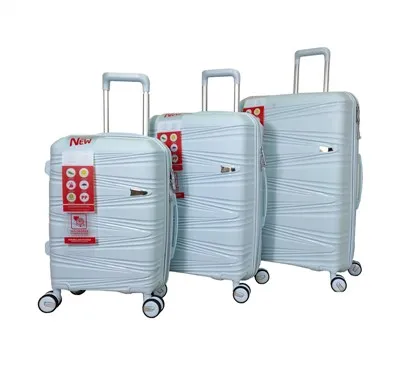

For custom luggage manufacturers, smart features are evolving from "optional extras" to "must-haves." From tracking chips to anti-theft locks, and from charging ports to weighing systems, the ability to integrate technology into design is becoming a key indicator of a manufacturer's technical capabilities.