

The Global Luggage Market in 2026: A Tale Of Two Extremes
May 25, 2026
Leave a message
If there were one word to describe the global luggage market in 2026, it would be "polarization." On one hand, young people in Southeast Asia are snapping up stylish suitcases priced under 100 yuan; a lightweight PC-material suitcase easily sold over 10,000 units in a single month on TikTok. On the other hand, European consumers are willing to pay up to three times the price for smart luggage featuring USB charging ports, GPS tracking, and recyclable materials. Within the same suitcase category, completely different pricing dynamics are emerging across different markets. Behind this polarization lies a shift in consumers' functional expectations for luggage-from mere "availability" to "quality" and "suitability." The Southeast Asian market prioritizes design and value for money, with stylish, lightweight products rapidly gaining popularity through short-video platforms; in contrast, mature markets in Europe and the U.S. focus more on technological innovation and environmental sustainability, willing to pay a premium for smart features and recyclable materials.
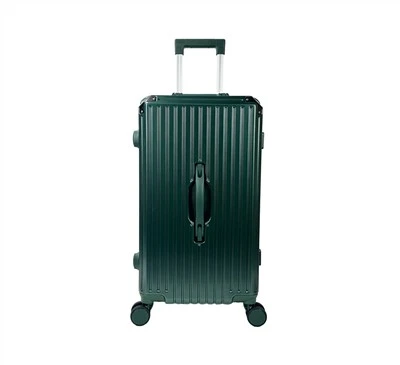

This divergent consumer landscape is also profoundly reshaping the operational logic of the entire industry. China's luggage manufacturing sector is responding to the diverse demands of global markets with greater agility. Take the small city of Xinggan in Jiangxi, China-which produces 60 million pieces of luggage annually-as an example. The region boasts a complete industrial chain with 95% self-sufficiency in components. From molds to retractable handles to fabrics, manufacturers can flexibly switch production lines without outsourcing, enabling a rapid-response supply chain model that delivers prototypes in 7 days, completes orders in 15 days, and supports small-batch trials and mixed-model container shipments. Through cross-border e-commerce platforms, manufacturers can rapidly adjust product designs based on regional consumer preferences-orders from the Southeast Asian market prioritize color variety and lightweight features, while production lines targeting Europe and the U.S. focus on integrating smart modules and obtaining certifications for recycled materials. Meanwhile, due to potential adjustments in the U.S. tariff framework, the global market has experienced significant volatility, with a marked divergence in gross profit margins across the carry-on luggage sector, and products of different positioning are undergoing a process of value repositioning.
Branding and differentiation are replacing the early price wars, becoming the dominant theme of competition in the global luggage market in 2026. From the "hundred-yuan aesthetics" of Southeast Asia to the "thousand-yuan smart" products of Europe and the U.S., luggage is entering the lives of every traveler in a diverse array of forms.